
Sewing Tutorial — Bag Making Guide
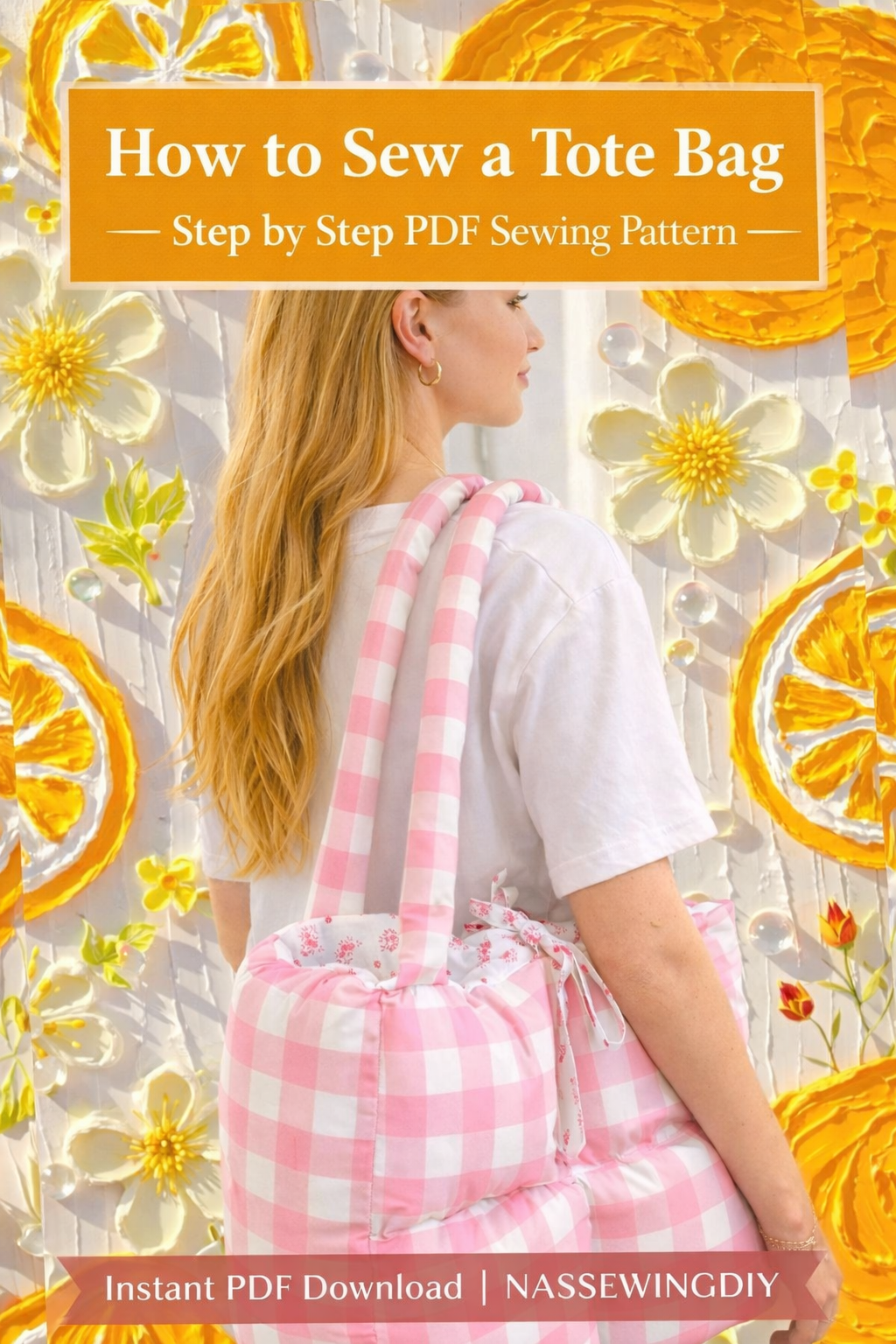
How to Sew a Tote Bag — Complete Step by Step Guide
Everything you need to sew your first bag at home — from choosing the right style and fabric, to printing your PDF pattern and finishing your seams. Tote, hobo, crossbody, bucket and more.
In This Guide
Everything you need — step by step.
Sewing your own bag is one of the most rewarding beginner projects you can take on. Bags are practical, stylish, and surprisingly quick to sew — and once you have made your first one, you will want to make ten more. Whether you are drawn to a classic tote, a slouchy hobo bag, a structured crossbody, or an adorable pet carrier, there is a pattern for every skill level and every style in the NASSEWINGDIY shop.
In this complete guide I will show you exactly how to sew a bag at home — from choosing your pattern and fabric, to printing your PDF and finishing your handles. All patterns are available as instant digital PDF downloads with full step-by-step illustrated instructions.
01 — Why Sew Your Own Bag?
Handmade bags have something store-bought bags simply cannot — character, quality, and the satisfaction of making something with your own hands. Here is why more and more people are choosing to sew their own:
- Customise everything — fabric, lining, size, handles, pockets
- Much better quality — you choose the materials, so you control the result
- Lower cost — a beautiful handmade tote can cost as little as €8–€15 in fabric
- A perfect gift idea — personalised and handmade gifts are always treasured
- A great beginner project — most bag patterns need no zipper and no curves
- Reduce waste — use leftover fabric and make something genuinely useful
"A handmade bag is not just an accessory — it is a piece of craft you carry with you every single day."
02 — What You Need to Get Started
- A basic sewing machine with a straight stitch
- Thread in a matching or contrasting colour
- Sharp fabric scissors
- Pins or fabric clips
- Interfacing — gives structure to bags, highly recommended
- Bag handles or webbing — width specified in your pattern
- Optional: a zipper or magnetic snap for closure
- A printer and A4 paper, or access to a copy shop for A0 printing
- A PDF sewing pattern — browse all bag patterns here
- An iron and ironing board — essential for pressing seams and applying interfacing
If this is your first bag project, choose a simple tote without a zipper or lining — fewer steps, quicker to finish, and a great introduction to bag construction.


03 — Bag Styles — Which One to Choose?
The NASSEWINGDIY bag collection includes over 32 patterns across every style — from simple beginner totes to structured crossbody bags and adorable pet carriers. Here is a guide to help you choose:


Tote Bag
The classic starting point — two rectangles of fabric, two handles, and a few seams. A simple tote can be completed in under 2 hours and is perfect for your very first bag project. Great for shopping, beach trips, and everyday use.
Hobo Bag
A relaxed, slouchy shoulder bag with a curved shape and soft structure. Slightly more construction than a tote but still very beginner-friendly. Elegant and practical for everyday carry.
Crossbody Bag
A structured bag with an adjustable strap worn across the body. Usually includes an interior pocket and a zip or magnetic closure. A great intermediate project once you have completed a simpler bag style.
Cute & Statement Bags
Fun-shaped bags — stars, animals, hearts, and more. Often quick to sew and a wonderful gift project. Perfect for using up fabric scraps.
Pet Carrier Bag
A functional, padded carrier designed for small pets. Includes ventilation mesh and secure closure. A unique and very popular pattern for pet owners who love to sew.

32 Bag Patterns
Every Style. Every Level.
From your first simple tote to a structured leather-look crossbody — browse 32 bag PDF sewing patterns, all available as instant downloads with full illustrated instructions included.
Shop All Bag Patterns04 — Best Fabrics for Bag Making
The fabric you choose affects how your bag looks, how long it lasts, and how easy it is to sew. Here are the best options for each bag style:
Always use interfacing on the exterior fabric of structured bags — it gives them shape, prevents sagging, and makes them look professionally made. Iron-on fusible interfacing is the easiest to use.


05 — How to Sew a Tote Bag — Step by Step
Here is a complete overview of the bag making process. Every pattern includes full illustrated instructions — this gives you a clear picture of what is involved before you start.
Download & Print Your Pattern
After purchase, download your PDF instantly. Print at 100% / Actual Size on A4 paper — or send the A0 file to a copy shop. Always check the test square on page 1 = 10×10 cm before printing the full pattern.
Prepare & Apply Interfacing
Cut your fabric pieces according to the cutting layout. Apply fusible iron-on interfacing to the exterior fabric pieces before sewing. This is the key step that gives your bag structure and a professional finish.
Sew the Exterior
Pin and sew the exterior bag pieces together following the instructions. For a tote bag, this typically means sewing the front and back panels together at the sides and base. Press all seams flat with your iron.
Attach the Handles
Pin your handles to the exterior bag at the positions marked on the pattern. Stitch securely — handles carry the weight of the bag, so sew a reinforcing box stitch or stitch multiple times for strength.
Sew the Lining
If your pattern includes a lining, sew the lining pieces together in the same way as the exterior. Leave a gap at the base for turning. A lining gives your bag a clean, professional interior finish.
Join Exterior & Lining
Place the exterior bag inside the lining with right sides together. Align the top edges and stitch around the opening. Pull the bag through the turning gap, push out the corners, and press the top edge flat.
Topstitch & Finish
Close the turning gap and topstitch around the bag opening for a clean edge. Give your finished bag a final press. Your handmade bag is ready to use.


Bag PDF Sewing Patterns — All Styles
32 patterns — tote, hobo, crossbody, bucket, pet carrier & more. Instant download. A4 & A0 included. Beginner to advanced with full illustrated instructions.
Browse All Bag Patterns →

06 — How to Print Your PDF Pattern
A4 — Print at Home
- Open the PDF in Adobe Acrobat Reader (free download)
- Go to File → Print → set to "Actual Size" or "100%"
- Never select "Fit to Page" — this shrinks your pattern pieces
- Print page 1 only first and check the test square = 10×10 cm
- If correct, print all pages and assemble by overlapping the margins
A0 — Copy Shop
- Send the A0 PDF to any copy shop or print lab
- Request printing at 100% scale / actual size on A0 paper
- No assembly needed — complete pattern on one large sheet
- Typically costs €2–€5 depending on your location
If your test square does not measure 10×10 cm, your printer is scaling the file. Return to print settings and select "Actual Size". Do not proceed until the test square is correct.
07 — Frequently Asked Questions
Do I need interfacing to sew a bag?
For structured bags like crossbody and tote styles — yes, interfacing is strongly recommended. It gives the bag shape and prevents the fabric from sagging. For softer styles like hobo bags and pet carriers, the pattern will specify what is needed.
How long does it take to sew a tote bag?
A simple lined tote bag can be completed in 2–3 hours as a beginner. A structured crossbody bag with pockets and a zipper may take 4–6 hours. It gets significantly faster after your first attempt.
How much fabric do I need?
Every pattern includes a fabric requirements list. As a general guide, expect 0.5–1 m for a simple tote, and 1–1.5 m for a lined bag with a separate lining fabric. Interfacing quantities are also listed.
Can I use faux leather with a regular sewing machine?
Yes — use a leather needle and a longer stitch length (3–3.5 mm). Do not use pins on faux leather as they leave permanent holes — use clips or wonder tape instead. A Teflon foot is helpful but not essential.
Can I sell bags made from these patterns?
Yes — you are welcome to sell finished handmade bags. Reselling, sharing, or distributing the pattern files themselves is not permitted.
I am a complete beginner — which bag should I start with?
Start with a simple tote bag — no zipper, no curves, and very few pattern pieces. Once you have completed one, you will have the confidence and skills to try a more complex style. Message me and I will help you choose the right pattern for your skill level.
Ready to Sew Your First Bag?
Browse 32 PDF bag sewing patterns — tote, hobo, crossbody, bucket, pet carrier and more. Instant download. A4 & A0 included. Beginner to advanced with full illustrated instructions.